For a local group in formation: what each person wants, can offer and fears — and how differences become a shared way of working built on trust.
Workshop report
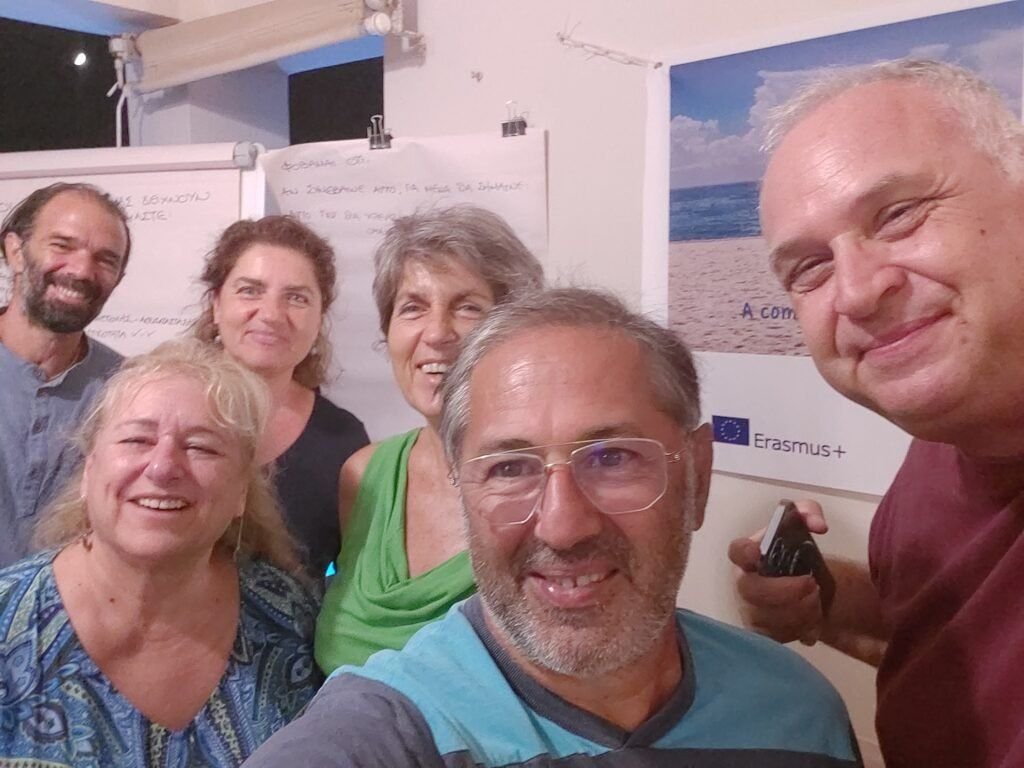
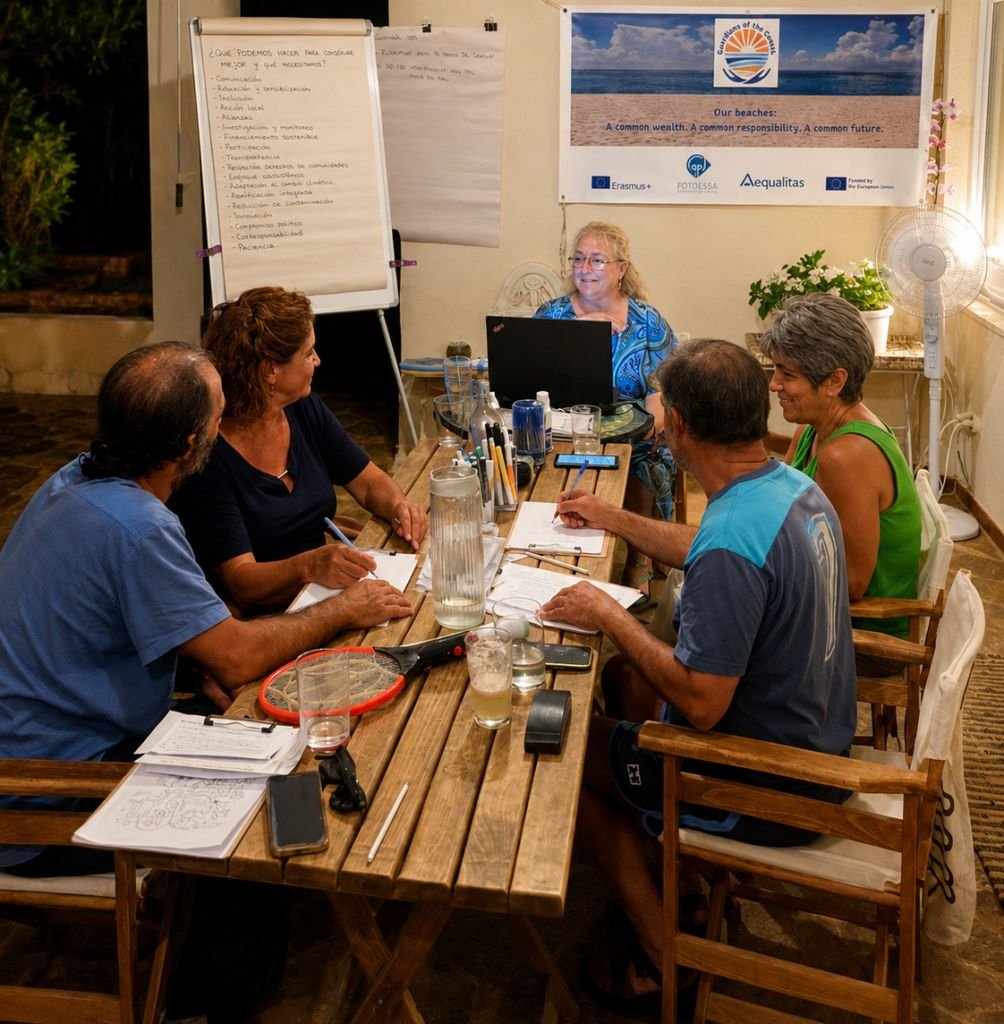
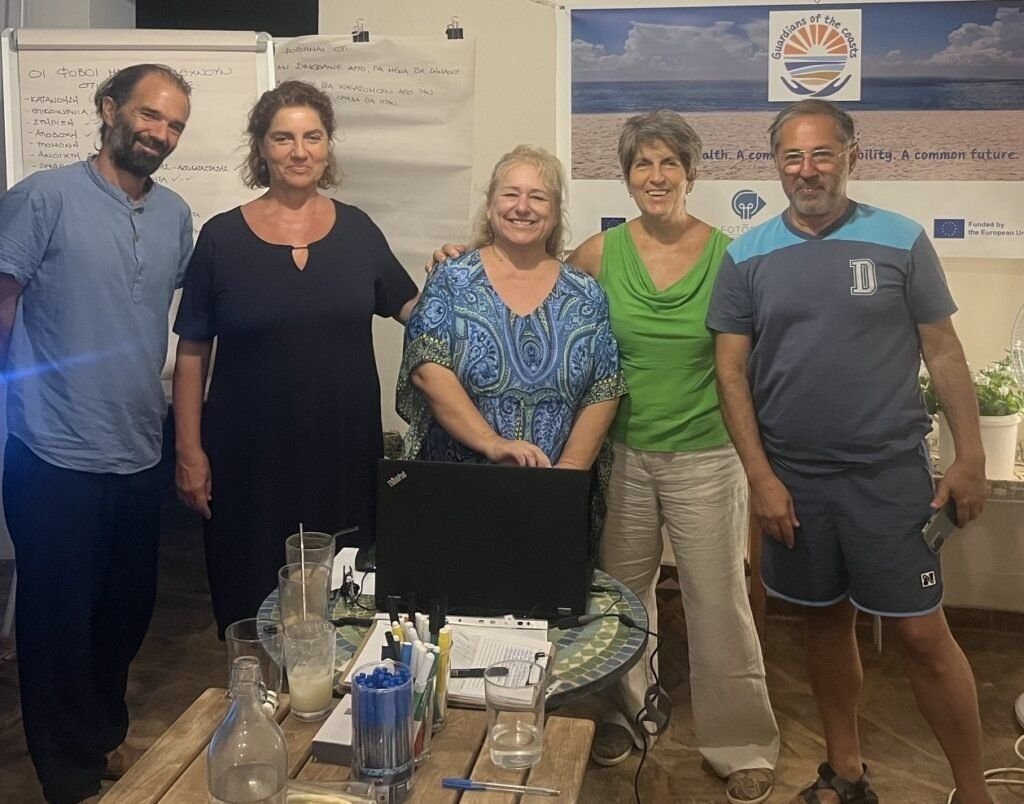
The 4th experiential workshop of the European project Guardians of the Coasts was held on 20 August 2026 by Fotoessa – Centre for Education, Research and Action, as part of the project’s capacity-building programme for adults. The workshop was designed for a small core of six active citizens who live and are active in the Municipality of Saronikos and are in the process of forming a local collaboration group.
Unlike the project’s previous workshops, which focused on storytelling, the relationship between people and place, and collective memory, the fourth workshop turned to the internal functioning of a group of active citizens. Its central question was not “what is the right recipe for a good team”, but what these particular people need in order to work together with trust, continuity and effectiveness. It was established as a principle from the outset that the process would not judge personalities as “good” or “bad”, but would focus on experiences, behaviours and needs.
The process began with a self-assessment test, in which participants individually recorded how they perceived their own place within the group. This was followed by a recognition game based on real personal information that they themselves had chosen to share. The many wrong guesses and the surprise caused by the revelations showed, in a simple and safe way, that even people who already know each other see only a small part of one another’s experience, skills and personal history.
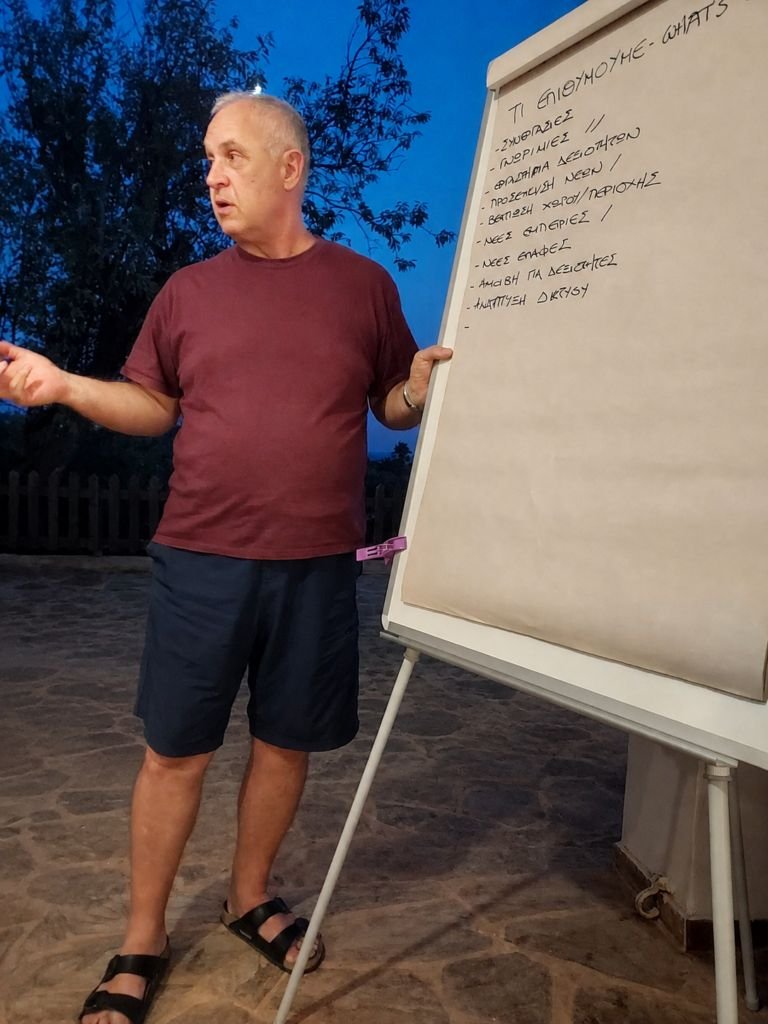
In the main part of the workshop, participants worked on three personal questions: “What do I want from this shared effort?”, “What can I contribute?” and “What am I afraid of?”. Their wishes included building partnerships and new relationships, gaining experience and knowledge, mobilising young people, personal growth, putting skills to meaningful use, and improving both the natural and the social environment. At the same time, mapping their contributions revealed resources that already exist: time, experience, networks of contacts, organisational and communication skills, educational expertise, technical and practical knowledge, creativity, coordination ability, support in the field and a willingness to give of oneself.
The question “What am I afraid of?” was worked on anonymously. The papers were redistributed and each participant was asked to speak about someone else’s fear as if it were their own. The exercise turned fears from individual concerns into shared material for empathy. Among the fears that emerged were lack of respect, betrayal or behind-the-scenes conflicts, bureaucracy, burnout, proposals not being taken up, unclear boundaries of collaboration, extreme or incompatible attitudes, and losing the joy of taking part. Most importantly, however, these fears were translated into needs of the group: support, understanding, respect, trust, clear communication, practicality, open discussion, flexibility and a sense of safety.
Collaboration was also put to the test experientially through the activity “Two hands – one pencil”. In pairs, two people had to draw different subjects at the same time with the same pencil, without speaking. In the reflection that followed, ideas emerged such as making room for the other, non-verbal understanding, taking turns to lead, and putting the shared task ahead of imposing one’s own will. The participants themselves noted that “we gave each other space” and that what mattered was “to work together” and “to get the job done”.
The material from all the activities was finally used for a first collective outline of how the group wants to operate. The desired qualities recorded were support, understanding, flexibility and adaptability, communication, acceptance, open discussion, honesty, efficiency, practicality, action, courage, ethics and democracy. Correspondingly, the group stated that it does not want “broken telephones”, cliques, misunderstandings, party politicisation, extremist beliefs or incompatibility. The discussion also produced specific practical commitments: continued participation, regular updates, communication by email, timely feedback, mapping potential new members, exploring funding, and proposals for future actions. Democratic decision-making also emerged as a key requirement.
The workshop did not arrive at – nor did it attempt to arrive at – a complete manifesto. Instead, it brought out something more useful at this stage: a strong shared foundation of values, together with the need for further convergence around a common strategic direction. In the final feedback it was recognised that the participants share many similarities, mutual respect and a common ethical basis, but still approach the initiative through different experiences and personal expectations. This diversity was treated not as a problem, but as a pluralism that needs a common point of reference and a strategy.
The 4th workshop confirmed an essential dimension of capacity building for active citizenship: before a group can act effectively towards the outside world, it needs to learn to see, listen to, trust and draw on the people within it.
Collaboration does not begin with unanimity. It begins with the ability of different people to make room for one another and to turn their differences into shared action.