What is worth carrying from the beaches of yesterday to the beaches of tomorrow? Participants moved from shared memories to a common vision for the coast.
Workshop report
Collective memory as a tool for co-shaping the future of our coasts
What is worth carrying over from the beaches of yesterday to the beaches of tomorrow?
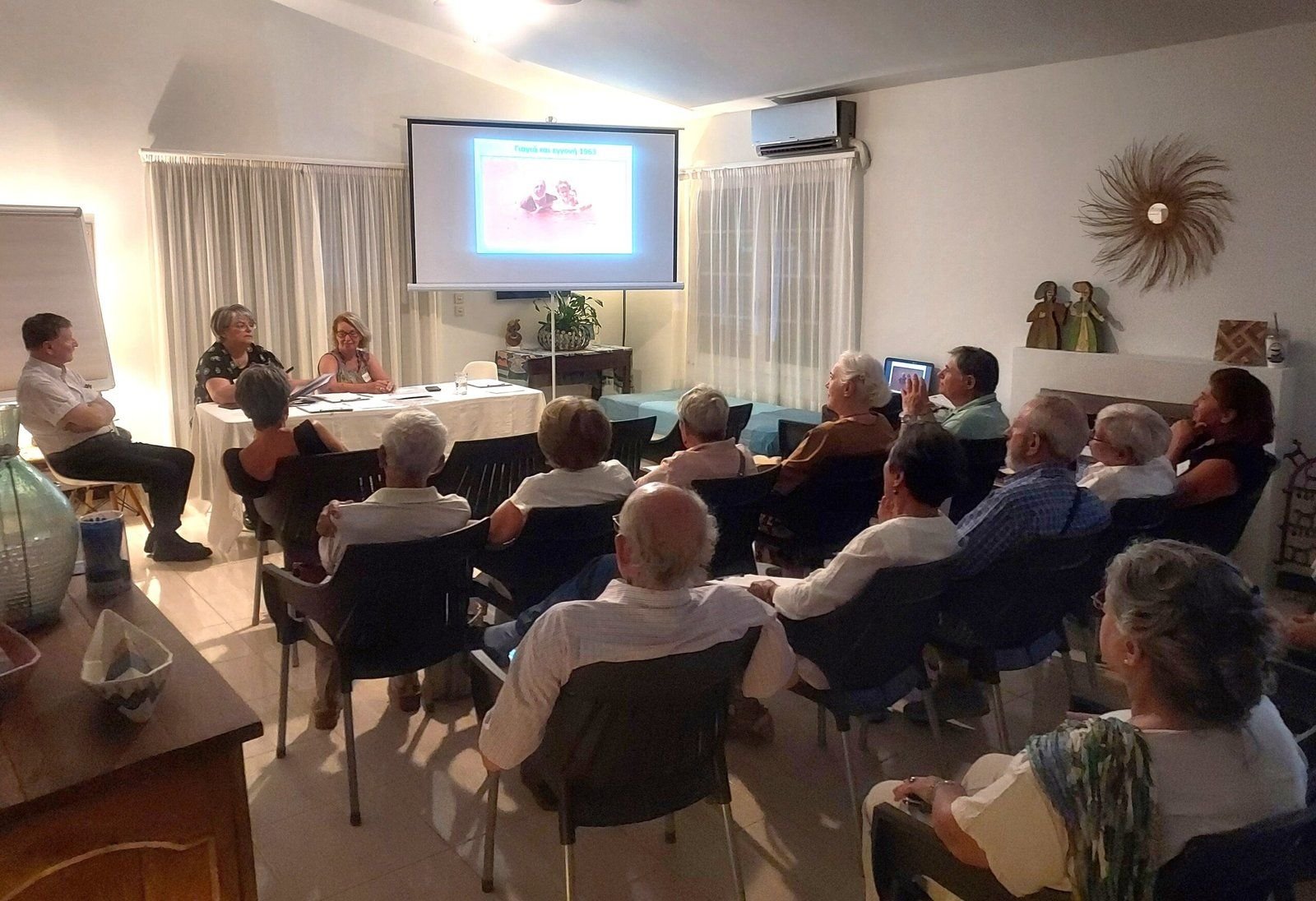
This was the question behind the third experiential workshop of the European project Guardians of the Coasts, held on 23 July 2026 under the title “Beaches: From Collective Memory to a Shared Vision”. It was delivered by Aspasia Protogerou and Giannis Sourelis for Fotoessa – Centre for Education, Research and Action as part of the project’s capacity-building programme for adults.
The workshop introduced a third, distinct educational dimension to the project’s methodology. The first workshop had focused on empowering a community of active citizens through storytelling, while the second had explored the relationship between people and place through Narrative Inquiry. The third used collective memory as a starting point for co-creating a shared vision for the future of the coasts.
Beaches are not only natural landscapes or places of leisure. They are places of history, culture, memory and human experience. Understanding how previous generations communicated, created, sought refuge and lived on the coasts can help us recognise which values and practices are worth preserving and carrying into the future.
In this spirit, history was not treated as a simple look back at the past, but as a living educational tool that fosters dialogue, critical reflection, active citizenship and the collective shaping of a shared vision.
Three pathways into the history of the coasts
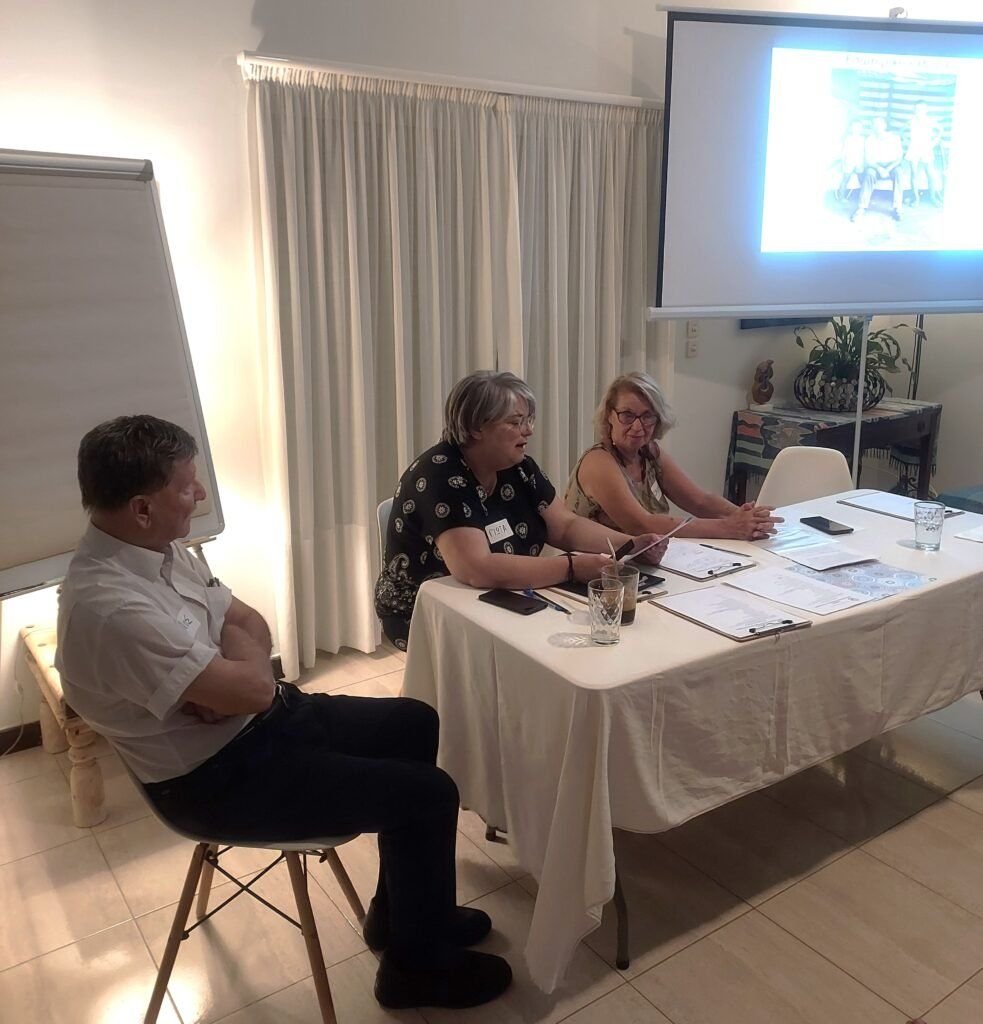
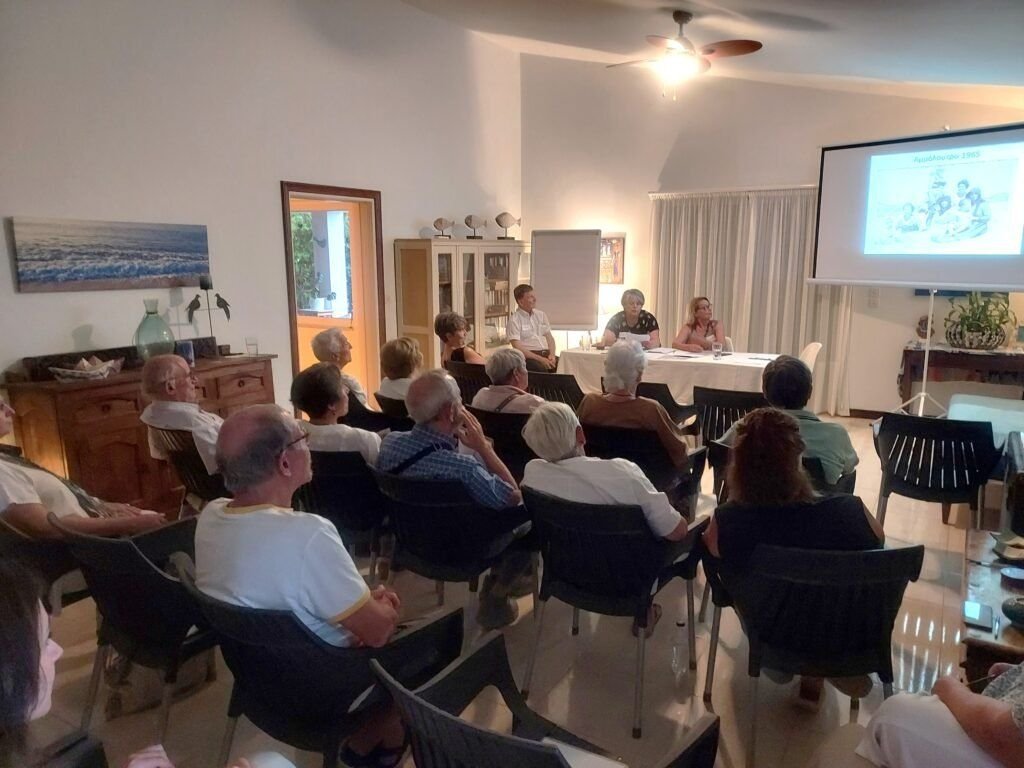
The educational process began with three talks by people with deep knowledge of the history and cultural heritage of the area.
Archaeologist and researcher Nikos Moraitakis presented beaches as places of communication from antiquity to the present day. He highlighted the importance of coastal landmarks and ancient beacon stations (fryktories), which formed parts of networks for relaying messages along the coast and inland.
Zacharo Fratzeskou, a researcher of the history of Palaia Fokaia, presented beaches as places of refuge and creation. Through personal and recorded testimonies, she brought to light the experience of the Asia Minor refugees who settled in the area after 1922: the hardships of life in tents, the mutual support that developed among them, and the way they brought their seafaring knowledge and cultural traditions to their new home.
Giota Drakou, a researcher of local folklore, presented beaches as places of leisure and social life. Using testimonies and photographs, she described how families from the Mesogeia area spent the summer months on the coast, building makeshift shelters and combining rest with communal life, play, song and human contact.
The three talks gave rise to the four key concepts that formed the backbone of the workshop:
Communication – Refuge – Creation – Leisure.
From historical knowledge to collective learning
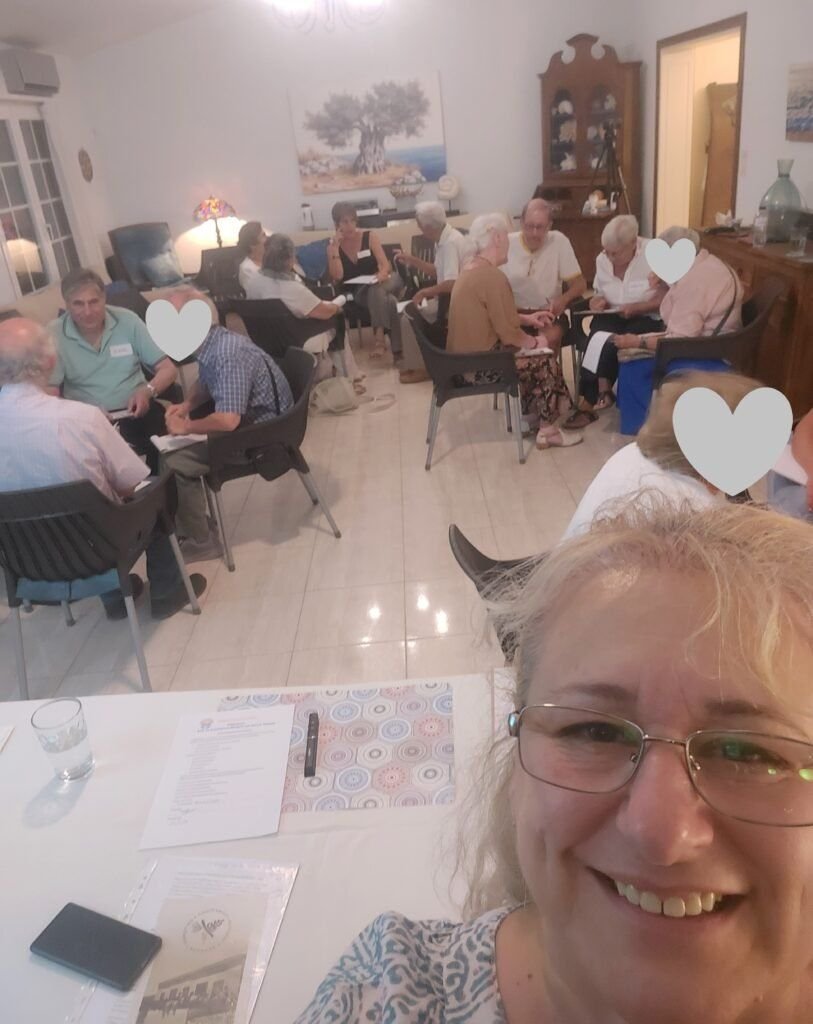
The participants then split into mixed working groups. Each group worked on one of the four concepts, examining the positive and negative aspects of both the past and the present.
The aim was not to compare different eras in order to decide which was “better”. Participants were asked to identify what must not be lost from the past, what we need to leave behind, which elements of today are worth keeping and what needs to change.
Through this process, historical knowledge became a starting point for dialogue, critical reflection and collective learning. Participants were not passive recipients of information; they used historical narratives to re-examine the present and imagine the future.
The values and practices we want to carry into the future
Although each group worked on a different concept, the results showed a remarkable convergence.
Shared values emerged again and again, such as:
freedom, cooperation, solidarity, human communication, creativity, simplicity, education, collective consciousness and responsibility towards the common good.
At the same time, the groups proposed practices that can help shape the beaches of the future:
voluntary personal contribution, protection of natural resources, the circular and exchange economy, experiential learning and play, as well as the preservation of historical memory and cultural wealth.
The participants thus approached beaches not only as natural or tourist spaces, but as places where communities are built, human relationships are formed and cultural values are passed on.
In this way, the workshop achieved its main goal: to turn collective memory into a shared vision for the beaches of the future.
The participants’ experience
The evaluation forms confirmed the workshop’s positive educational impact. Participants described the experience as interesting, meaningful and creative.
They placed particular value on:
- discovering little-known aspects of local history,
- exchanging different perspectives,
- working as a team,
- and the opportunity to collaborate with people they had not known before.
Many said that the workshop helped them realise that protecting beaches is not only about safeguarding the natural environment. It is also about preserving the historical memory, shared values and cultural identity of local communities.
From collective memory to active citizenship
The third workshop made a substantial contribution to the goals of Guardians of the Coasts, showing collective memory to be a powerful tool for adult education, active citizenship and civic participation.
The sustainable protection of the coasts does not depend solely on scientific knowledge, technical solutions or public policy. It also depends on communities of people who know the history of their place, recognise the values that unite them and take an active part in shaping their common future.
The workshop confirmed yet another fundamental principle of the project’s educational approach:
Collective memory is not only about what we remember from the past. Above all, it is about what we choose to carry into the future.
Our beaches.
A common good.
A shared responsibility.
A shared future.
🇪🇺 Funded by the European Union. Views and opinions expressed are however those of the author(s) only and do not necessarily reflect those of the European Union or the State Scholarships Foundation (IKY). Neither the European Union nor the granting authority can be held responsible for them.