Using narrative inquiry, participants explored how specific beaches have shaped their lives and identities — and why the places we love become the places we want to protect.
Workshop report
Workshop 2 – Narrative Inquiry: Storytelling as a tool for personal reflection, human connection and making sense of the relationship between people and place
So what, in the end, is a beach?
Is it a natural site? A place of leisure? A point on the map? Or is it something much more: a place of memory, relationships and personal identity?
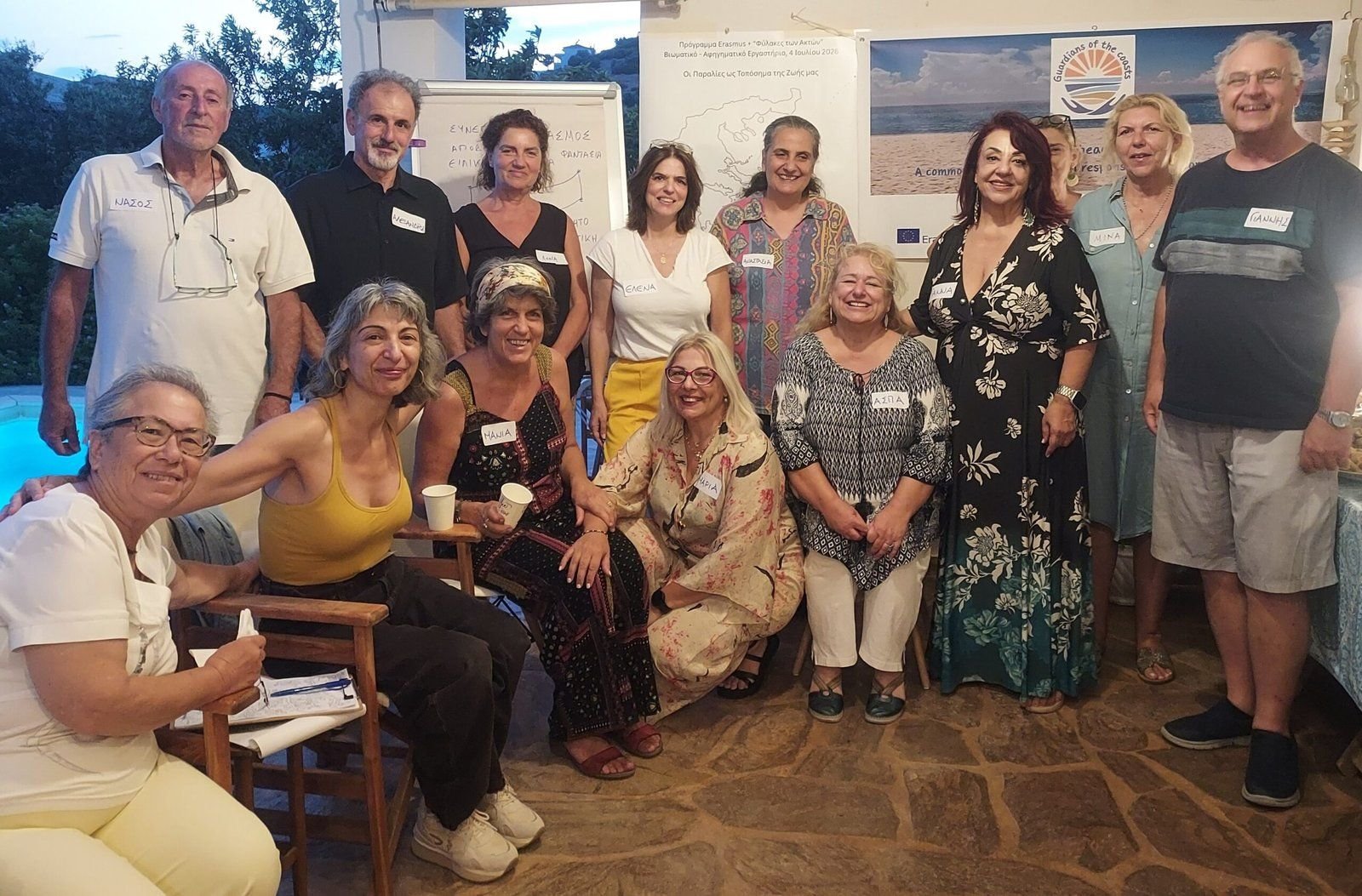
These were the questions behind the second experiential workshop of the European project Guardians of the Coasts, entitled “Beaches as Landmarks of Our Lives”, delivered by Fotoessa – Centre for Education, Research and Action on 4 July 2026, as part of the project’s capacity-building activities.
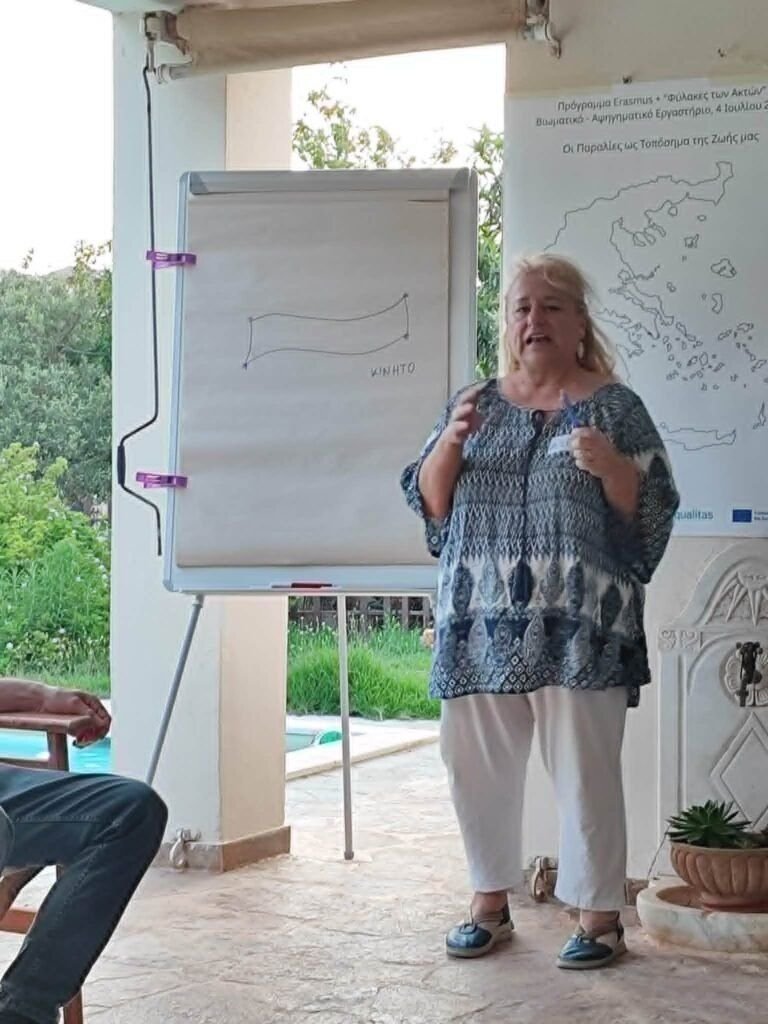
The workshop drew on the methodology of Narrative Inquiry, approaching storytelling not as a simple retelling of events but as a process of personal reflection and of making meaning out of experience. The aim was neither to collect memories nor to record stories about beaches. Instead, the goal was to create a safe learning space in which participants could explore how particular places have influenced their lives and helped shape their personal and social identity.
From the very start of the workshop, the participants co-created the working framework themselves, through the symbolic metaphor of the “Flying Carpet”. Rather than being presented with predetermined rules, they were invited to identify which attitudes and behaviours would allow the “journey” of the stories to take place safely, respectfully and with trust. Through this process, active listening, empathy, honesty, equal participation, respect for different experiences and the avoidance of any form of judgement emerged as fundamental principles.
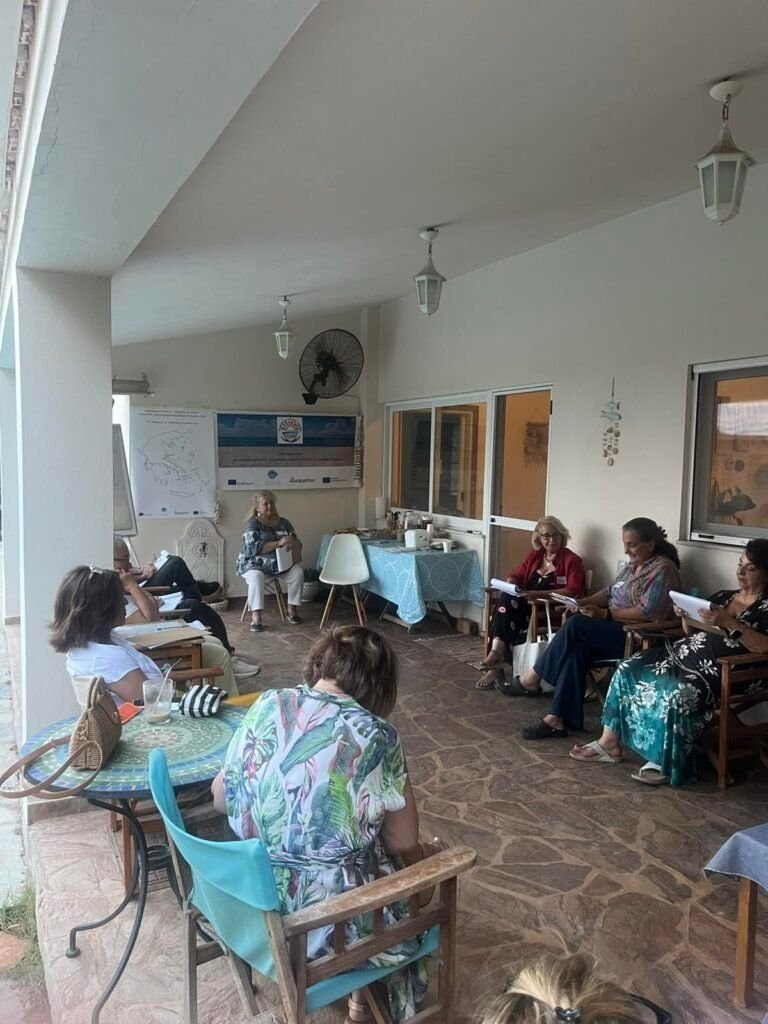
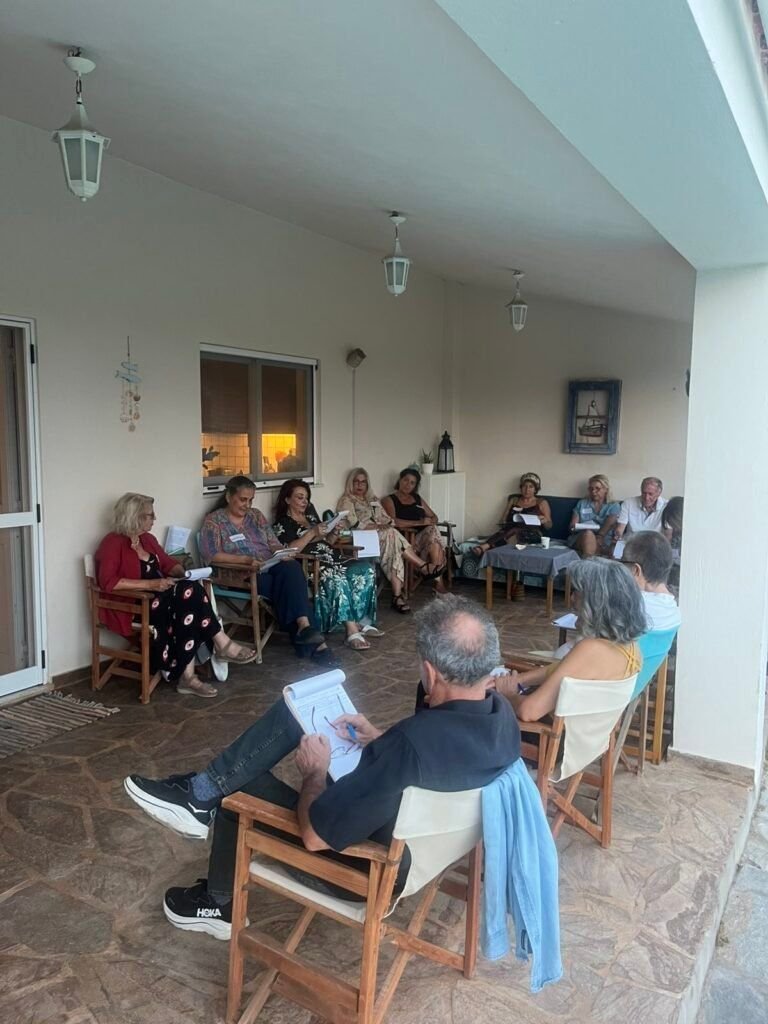
Next, each participant told a personal story connected to a beach that had left an indelible mark on their life. The narratives covered a wide range of experiences: childhood memories, family moments, friendships, loves, losses, important decisions, moments of freedom, personal change and inner searching. Although each story was unique, it gradually became clear that behind the different personal journeys lay shared human experiences and values.
The process was enriched by a visual mapping activity in which participants marked on a map of Greece the beach linked to their story. This created a symbolic map of personal memories, highlighting both the geographical variety of the experiences and the common cultural space that connects people with the Greek coastline.
A key element of the methodology was active listening. Instead of commenting on or evaluating the narratives, participants wrote down words expressing the emotions, values and ideas that each story evoked in them. At the end of the workshop, these words were brought together in the collective “Map of Shared Human Emotions and Values”, capturing the common emotional and value footprint of all the narratives.
The result was particularly interesting. Although the stories referred to different places, different times and different personal journeys, the recurring concepts were strikingly similar: nostalgia, trust, joy, love, serenity, freedom, gratitude, intimacy, acceptance, friendship, kindness, human connection and respect. The “Emotional Map of the Beaches” showed that, despite people’s different experiences, the deeper values associated with meaningful places are remarkably alike.
The workshop evaluation questionnaires confirmed the same picture. Participants described the experience as meaningful, moving and warmly human. Many said that through other people’s stories they recognised elements of their own lives, while several noted that they had realised how many emotions and experiences can be shared by people who had been strangers until then. Particular mention was made of the importance of active listening, the value of acceptance without judgement and the creation of a safe space where everyone can express themselves freely. At the same time, a number of participants stressed that the workshop helped them reflect on their relationship with the sea, appreciate even more the importance of beaches in their lives and realise that personal stories can act as bridges of communication and understanding between different people.
As a capacity-building learning activity for adults, the workshop demonstrated the potential of Narrative Inquiry as a methodology that nurtures personal reflection, active listening, empathy and the ability to recognise shared human experiences. Learning did not come from the transmission of knowledge but from the encounter of different personal journeys, through which participants redefined both their relationship with places and their relationship with other people.
At the same time, the workshop made a substantial contribution to the goals of Guardians of the Coasts, showing that protecting the coasts is not solely a matter of environmental knowledge or institutional intervention. It requires personal bonds with place, the cultivation of empathy and the recognition that shared human experiences can form a strong foundation for active citizenship, social cohesion and care for the commons.
The stories, values and conclusions that emerged during the workshop will feed into the project’s next learning workshops and will help shape the educational methodology of Guardians of the Coasts, documenting how personal experience, collective memory and local knowledge can strengthen environmental education and citizen participation.
The workshop confirmed one of the project’s fundamental principles:
People protect what they feel is part of their lives.
When beaches are recognised not only as natural landscapes but also as places of memory, relationships and personal identity, protecting them ceases to be merely an environmental obligation and becomes a deeply human choice.
Our beaches.
A common good.
A shared responsibility.
A common future.
Funded by the European Union. Views and opinions expressed are however those of the author(s) only and do not necessarily reflect those of the European Union or the State Scholarships Foundation (IKY). Neither the European Union nor the granting authority can be held responsible for them