The project’s first educational action: active citizens shared how their initiatives were born and evolved, turning personal stories into shared knowledge and a stronger sense of community.
Workshop report
When storytelling becomes a tool for empowering active citizens
How is a citizens’ initiative born? How does it evolve over time? What experiences, difficulties, and small and large successes shape its collective journey?
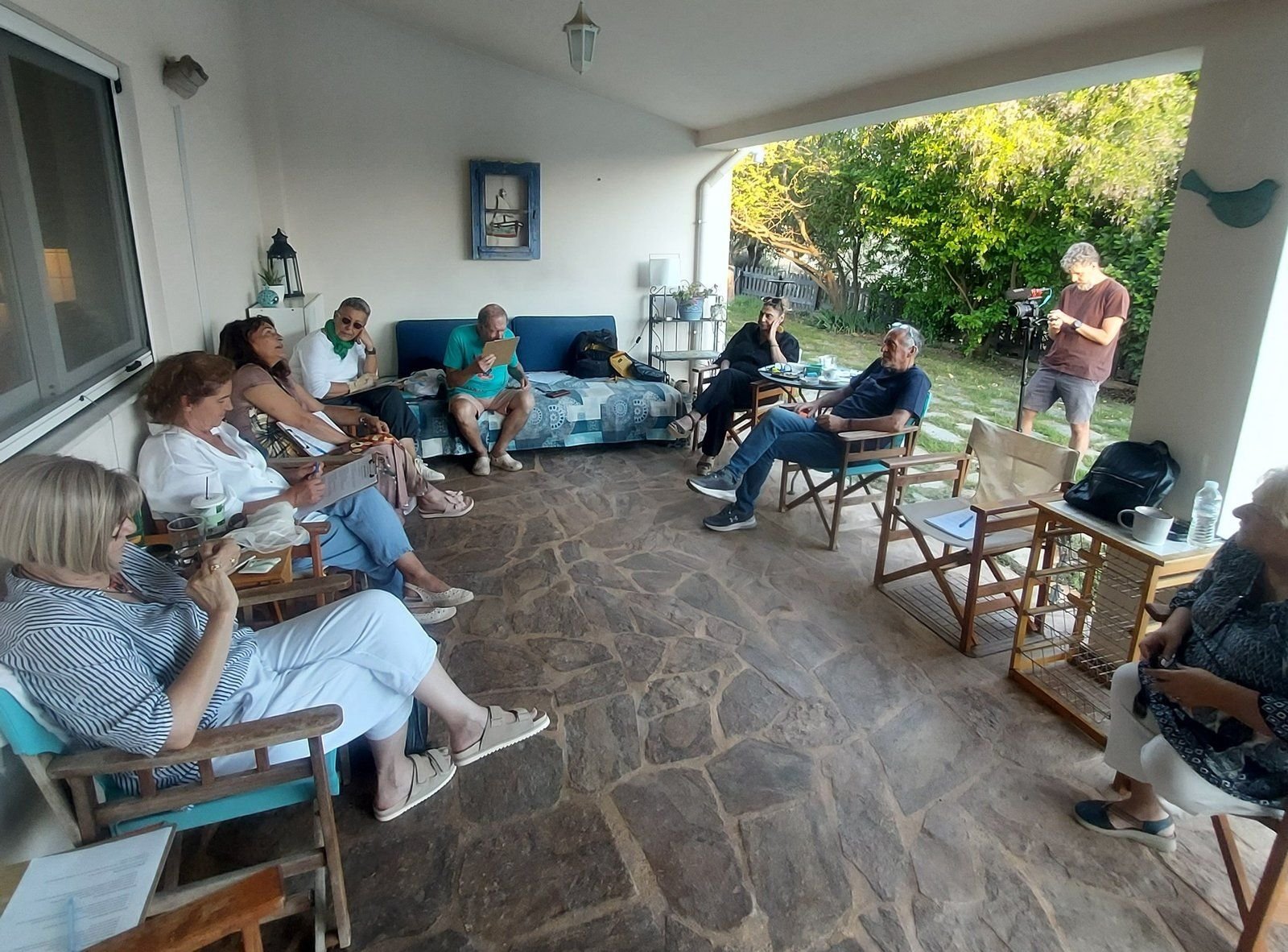
These were the questions behind the first experiential workshop of the European project Guardians of the Coasts, entitled “Sharing Stories from Our Beaches”, delivered by Fotoessa – Centre for Education, Research and Action.
The workshop was the project’s first educational activity and was designed as a capacity-building activity for adults, using the telling of personal experiences as a means of strengthening active citizenship, trust and cohesion within an existing community of active citizens (Community Building through Storytelling).
The workshop, held on 13 June 2026, brought together active citizens, volunteers and members of the local community who had already shared experiences through actions to protect the coast, take part in public life and defend public space. The aim of the meeting was neither to record the history of a collective initiative nor to discuss strategic choices. Rather, the goal was to give the people themselves space to tell their personal experiences, to reflect on the path they had travelled and to recognise how individual stories come together to form the collective experience of a community.
Participants shared personal stories about their relationship with the beaches and their involvement in actions to protect them. Some recalled the first mobilisations and the uncertainty of the first steps. Others dwelt on the friendships formed through collective action, or on the feeling that, for the first time, they were not facing alone a problem that concerned the whole community. Many realised that, although they had been working together for a long time, they knew very little about the experiences that had led their fellow volunteers to become actively involved in protecting the coast.
This process served as a meaningful collective reflection. The stories were not limited to recalling events; they gave participants the opportunity to revisit their shared journey, to acknowledge what they had achieved together and to express the values that had developed through their collaboration. Storytelling acted as a bridge between individual experience and the group’s collective identity.
The evaluation forms confirmed the value of this approach. Many participants reported that they had discovered sides of people they had not known until then, that they felt closer to the other members of the group and that they had come to realise that behind every active citizen there is a personal story worth hearing. Others stressed that they left the workshop more optimistic, with a stronger sense of trust in the group and a renewed willingness to continue their collective effort.
As an educational capacity-building practice, the workshop confirmed that storytelling can be a particularly effective tool for empowering groups of active citizens. Through the exchange of personal experiences, participants built deeper mutual understanding, strengthened relationships of trust and recognised the shared values that underpin their collective action. At the same time, they developed skills in active listening, reflection, meaningful dialogue and collaboration, which are core elements of active citizenship.
The workshop also made a substantial contribution to the wider objectives of Guardians of the Coasts. It showed that protecting the coast does not depend solely on scientific knowledge, the institutional framework or public policy. It also requires communities of people who have built relationships of trust, who work together, share experiences and feel part of a common effort to protect the commons.
Our beaches.
A common good.
A shared responsibility.
A common future.
🇪🇺 Funded by the European Union. Views and opinions expressed are however those of the author(s) only and do not necessarily reflect those of the European Union or the State Scholarships Foundation (IKY). Neither the European Union nor the granting authority can be held responsible for them