Burnout, conflict, boundaries and feedback: through role play and reflection, participants explored what exhausts a group, what makes it resilient — and one small, feasible next step.
Workshop report
Active Citizenship in Practice: when resilience becomes a team matter
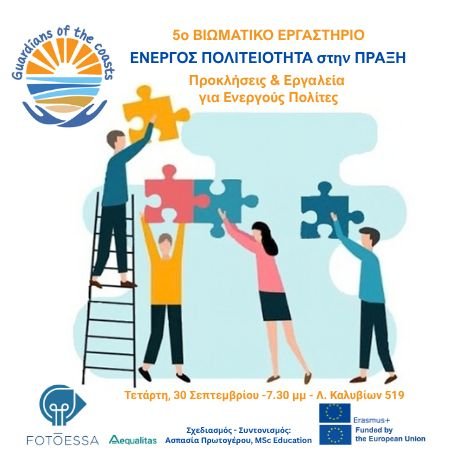
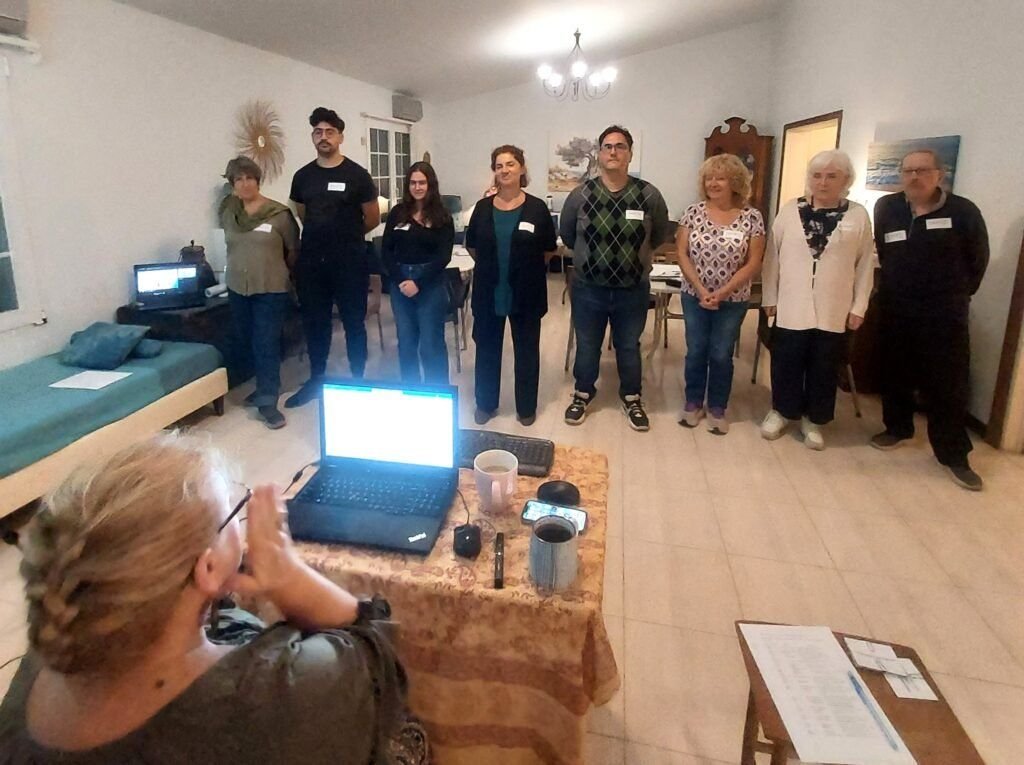
On 30 September 2026, Fotoessa hosted the 5th experiential workshop of the European project Guardians of the Coasts, entitled “Active Citizenship in Practice – Challenges & Tools for Active Citizens”.
The workshop focused on a question that often remains on the margins of the discussion about active citizenship: it is not enough to know which issue we want to act on. We also need to know how we can act together without wearing out either other people or ourselves.
The session began with an experiential mapping of the difficulties that active citizens face. Lack of time and resources, difficulty attracting people, the gap between ideas and action, bureaucracy, the feeling that those in charge do not listen, disagreements, past disappointments and personal overload emerged as experiences that do not concern just one person but recur across different groups.
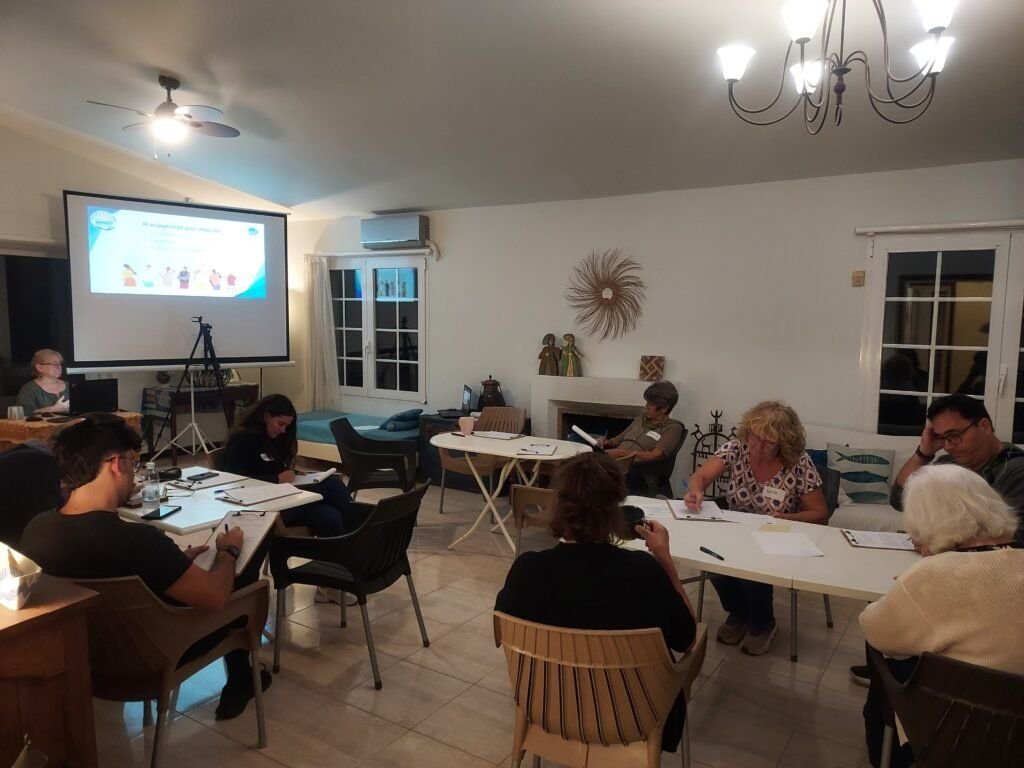
This finding led to the first role play, “A Team on the Verge of Burnout”. Participants acted out situations in which the burden constantly falls on the same people, goals exceed the team’s real capacity, everything is treated as urgent, disagreement turns into conflict, or saying “no” is perceived as a lack of commitment.
After the exercise, the Thomas–Kilmann model was used as a simple map for recognising different ways of handling conflict: competing, collaborating, compromising, avoiding and accommodating. The point was not to label one approach as always right, but to recognise which approach we are using and whether it serves the situation at hand.
In the second round of the role play, “A Team That Endures”, the problem did not disappear. The teams, however, gained new resources: clear boundaries, shared responsibility, small wins, recognition, mutual support, rest, joy, the right to say “no”, honest feedback, apology and repair.
The difference was substantial. The focus shifted from the “difficult person” to the dynamics and culture of the team.
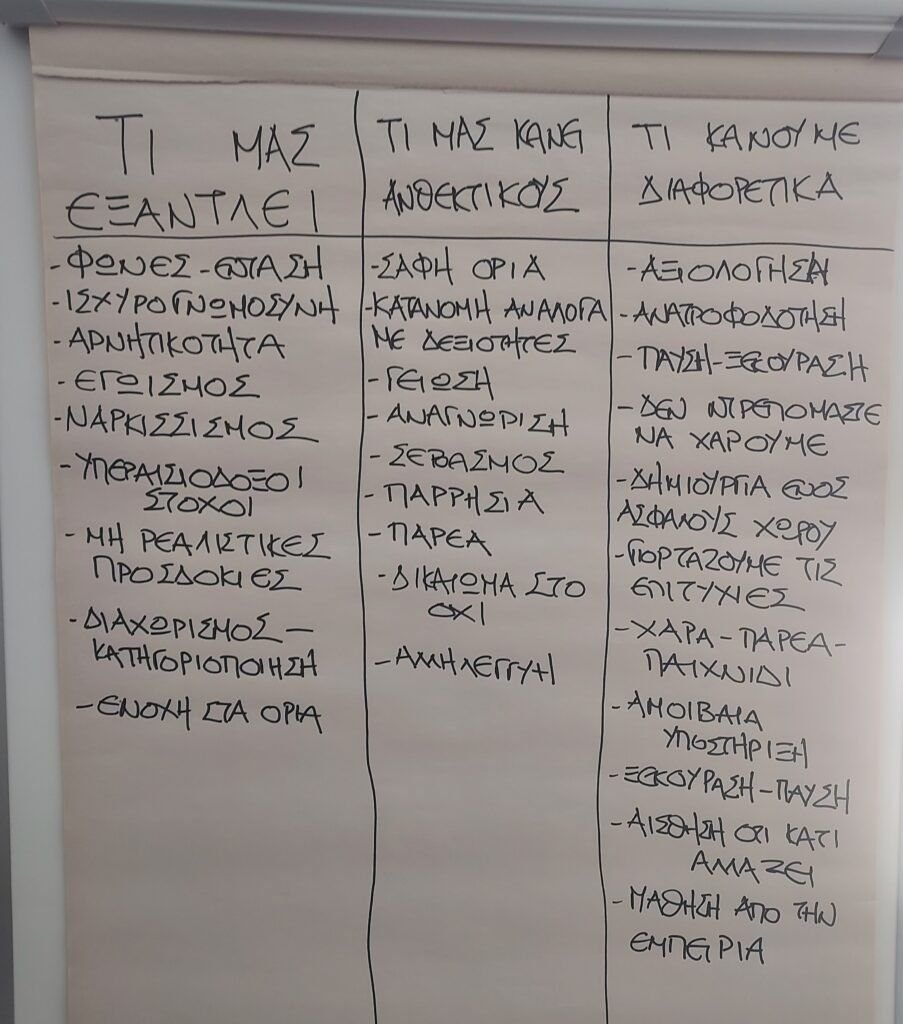
The reflection was captured on a collective board built around three questions: What drains us? What makes us resilient? What will we do differently? Among the draining factors, participants listed tension, stubbornness, negativity, unrealistic expectations and guilt around setting boundaries. On the resilience side, these were countered by respect, candour, sharing responsibility according to skills, recognition, solidarity and the right to say “no”. The practices that can change the way a team works included evaluation and feedback, pausing and resting, creating a safe space, joy, play, celebrating successes and learning from experience.
Particular emphasis was placed on boundaries as a precondition for connection rather than as walls, on building trust through consistency and clarity, and on personal responsibility: “I don’t expect others to guess, or to change for me.”
Likewise, feedback was approached not as criticism of the person but as a learning tool: specific, timely, focused on behaviour, respectful and aimed at improvement.
The final part moved the discussion from the big vision to the small step. Using the “My Next Move” worksheet, participants were asked to link an issue they genuinely care about with an obstacle, a tool, a person they can share it with and a concrete step they can take within the next seven days.
The final evaluation gave a particularly encouraging result: of the nine short forms completed, eight participants said they feel more able to take a next step towards collective action and one about equally able. No one chose “less able”.
The workshop closed with a simple but meaningful insight: resilience is not only an individual ability. It is also a feature of a team’s culture.
And with a reminder that sums up the meaning of the whole process: we do not only take care of the cause we are fighting for. We also take care of the people we are fighting alongside.
Guardians of the Coasts is implemented under the Erasmus+ programme.
Our beaches. A common good. A shared responsibility. A common future.
The project is co-funded by the European Union. Views expressed are solely those of the authors and do not necessarily reflect those of the European Union or the State Scholarships Foundation (IKY).