How is a coast truly protected?
The answer does not lie in a single science, a single institution or a single citizens' initiative.
It lies in the meeting of all of them.
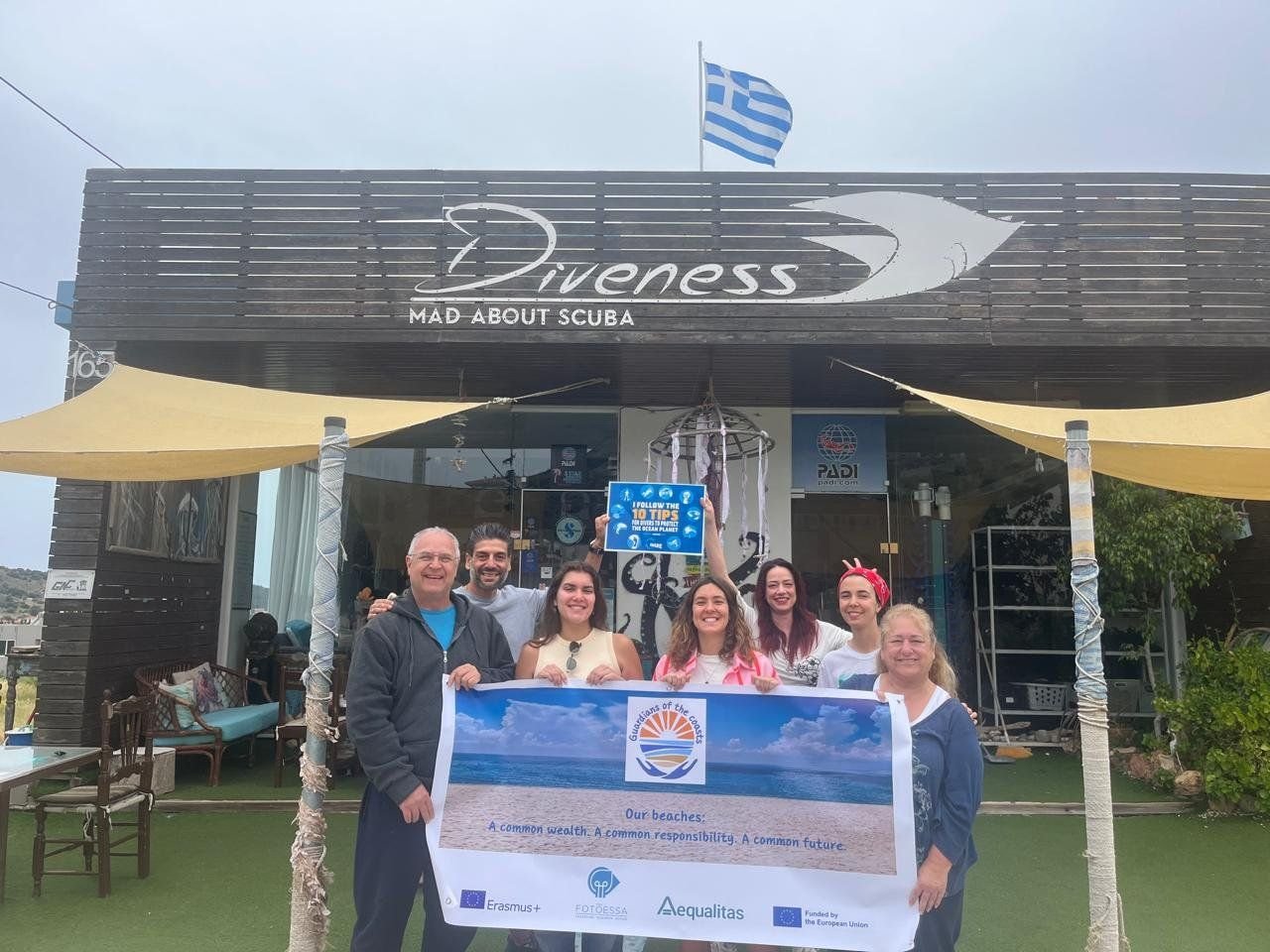
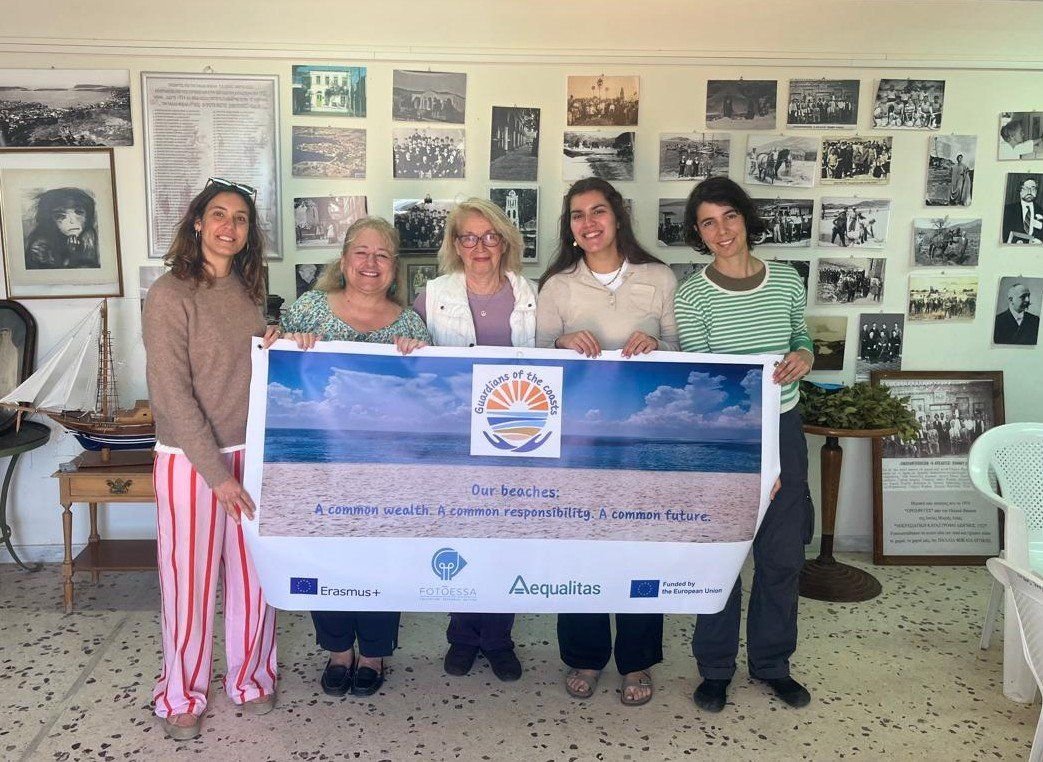
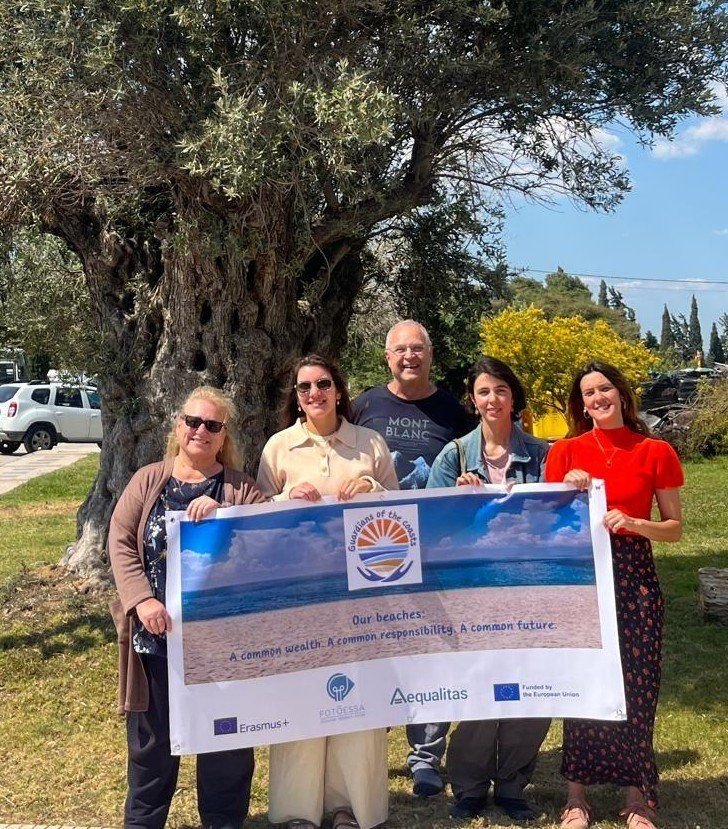
This was the philosophy behind the first international partner meeting of the European Erasmus+ project Guardians of the Coasts, which took place in Greece, hosted by Fotoessa, with the participation of the Portuguese partners Rita Sousa from Aequalitas and Rafaela Fortunato and Beatriz Pereira from Impactrip.
From the very first moment it was clear that the purpose of the visit was not a series of formal courtesy meetings. The partners were invited to meet people who approach coastal protection from different starting points but serve a common purpose: caring for the commons and strengthening active citizenship.
The journey began with local government, through meetings with the Mayor of Saronikos and the Deputy Mayor for Tourism. The discussions highlighted the crucial role that cooperation between public institutions and civil society can play in the sustainable management of coastal areas.
Next came the scientific community, with a visit to the Hellenic Centre for Marine Research (HCMR), where the partners saw how scientific knowledge contributes to understanding and protecting marine ecosystems. The meeting with environmental scientist Iasonas Markantonakis complemented this perspective, highlighting the importance of understanding the natural processes that shape coastlines and the challenges they face today.
The legal dimension was presented through meetings with lawyer and President of the Saronikos Municipal Youth Council Gavriil Kokkinis and lawyer and activist Antonis Sifakis. Both speakers highlighted the role of law, knowledge of one's rights and democratic institutions as fundamental tools for defending the commons and empowering active citizenship.
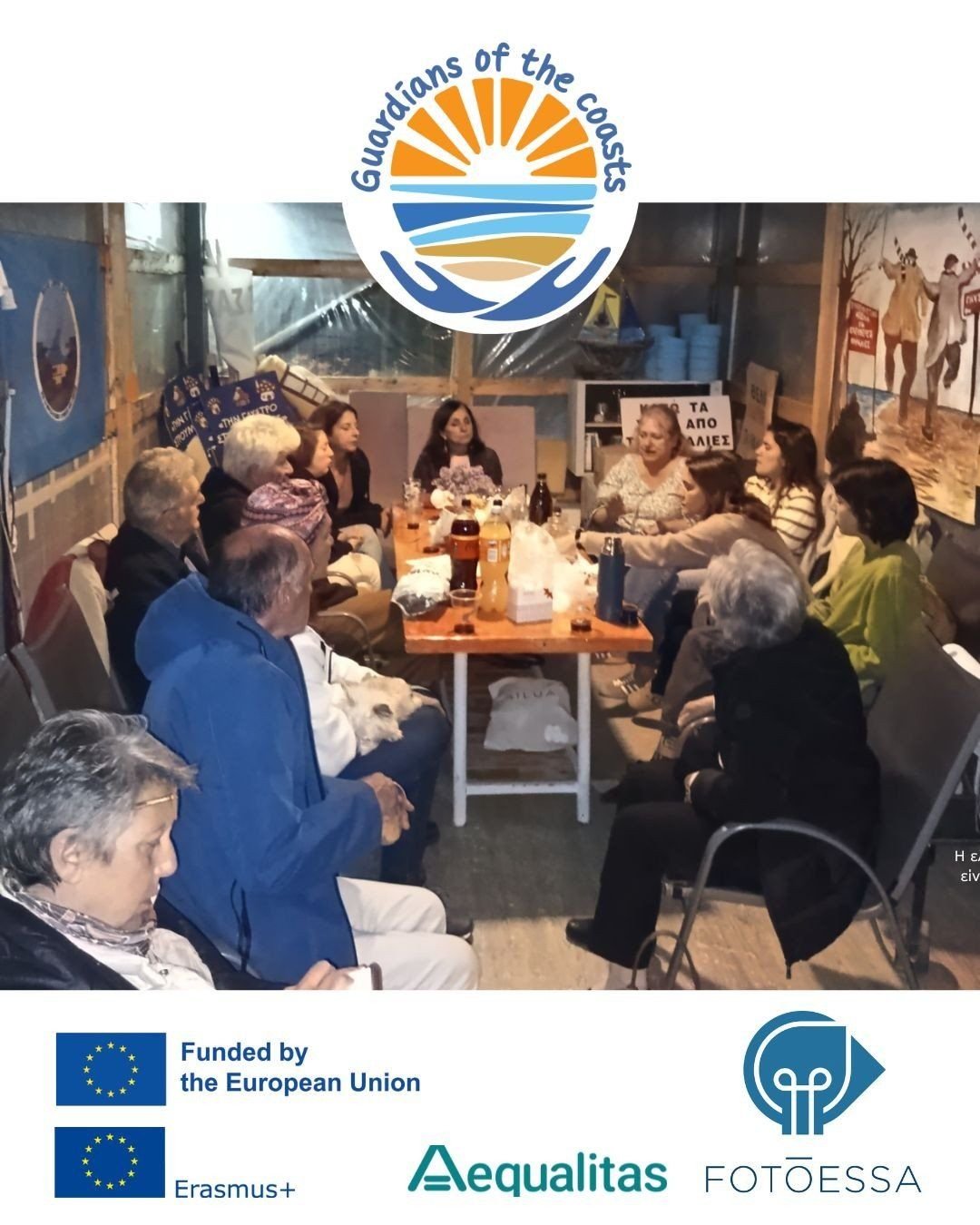
The people of civil society held a special place in the programme. Activist Christos Kotsireas, teacher and volunteer coordinator Anastasia Ioannidi, the President of the Cultural Association “Fokaeon Politeia”, Zacharo Fratzeskou, diver and environmental volunteer Angeliki Spanea, as well as the volunteers of the “Free Beaches” citizens' movement, presented different forms of active participation, showing that protecting the coasts is at once a matter of volunteering, culture, education, cooperation and everyday social action.
Each of these meetings added a different perspective to the same question:
How is a place protected?
Sometimes through science.
Sometimes through public administration.
Sometimes through the law.
Sometimes through education.
Sometimes through culture.
Sometimes through volunteering.
Sometimes through the everyday participation of citizens.
The partners realised that none of these approaches is enough on its own. Meaningful coastal protection is born when all these different forms of knowledge and action meet, cooperate and complement one another.
These visits were much more than an introduction to the Greek reality. They became the living starting point on which the project's first educational workshops were designed. The experiences, ideas and concerns that emerged from them are gradually being transformed into educational activities that strengthen environmental awareness, active citizenship and the participation of local communities.
This is the vision of Guardians of the Coasts.
To build bridges.
Between science and society.
Between local experience and international cooperation.
Between personal stories and collective responsibility.
Because coasts are not only natural ecosystems.
They are places where memory, culture, democracy, cooperation and human experience meet.
And their protection always begins with people who, despite their different paths, choose to work together for a common future.
Our beaches.
A common good.
A common responsibility.
A common future.
🇪🇺 Funded by the European Union. Views and opinions expressed are however those of the author(s) only and do not necessarily reflect those of the European Union or the State Scholarships Foundation (IKY). Neither the European Union nor the granting authority can be held responsible for them