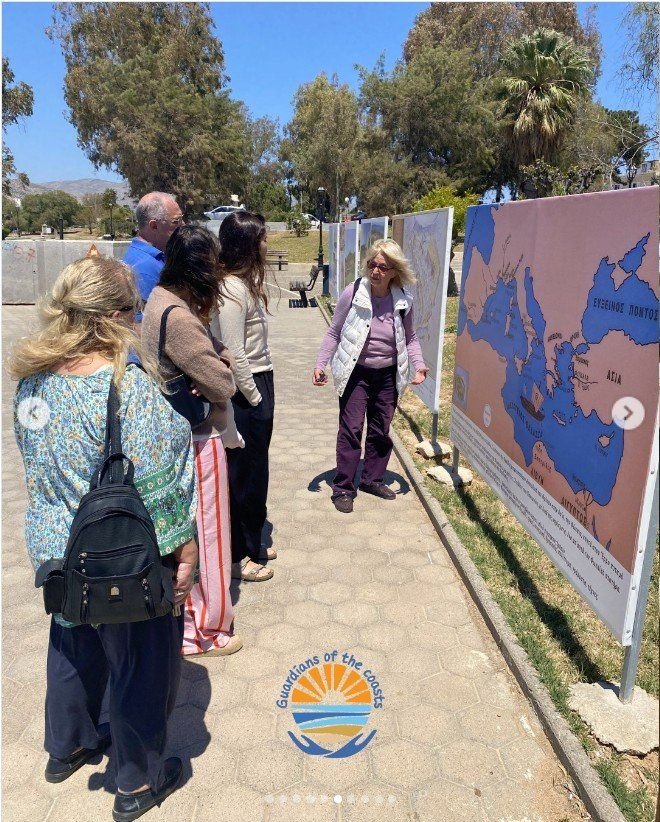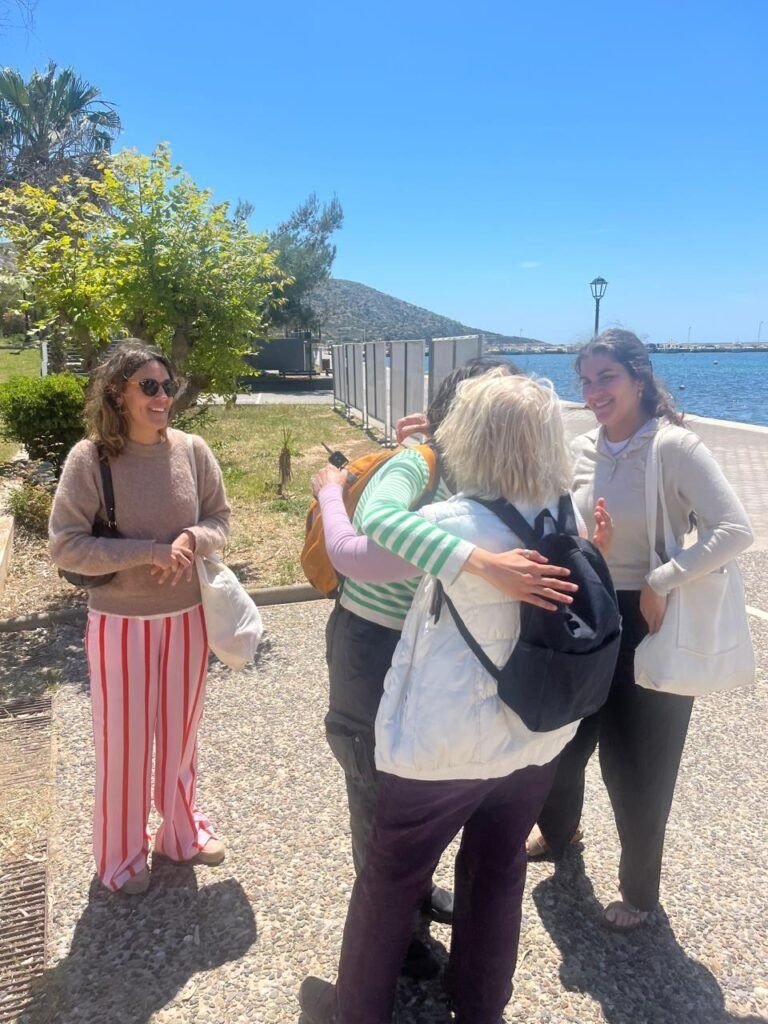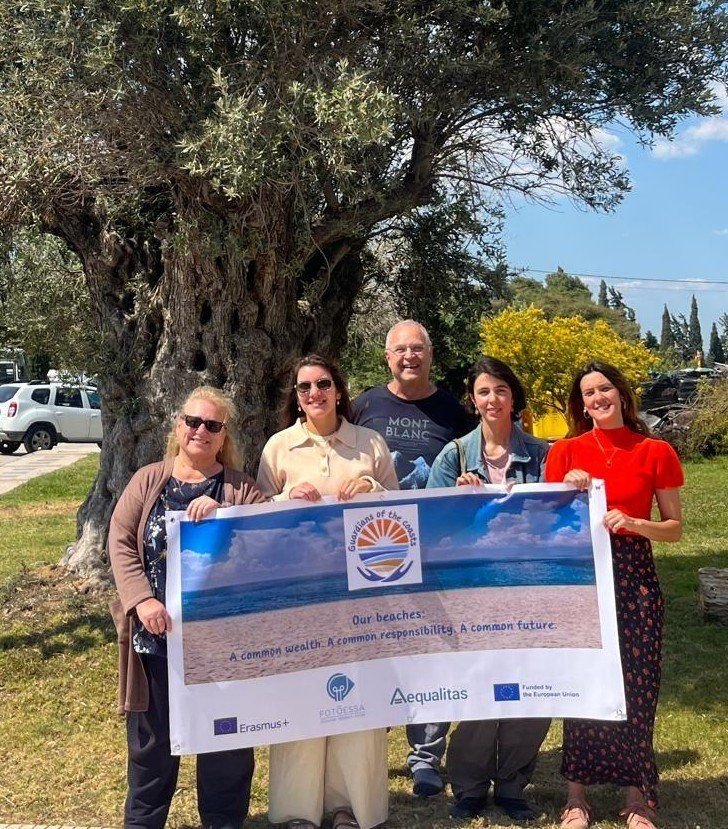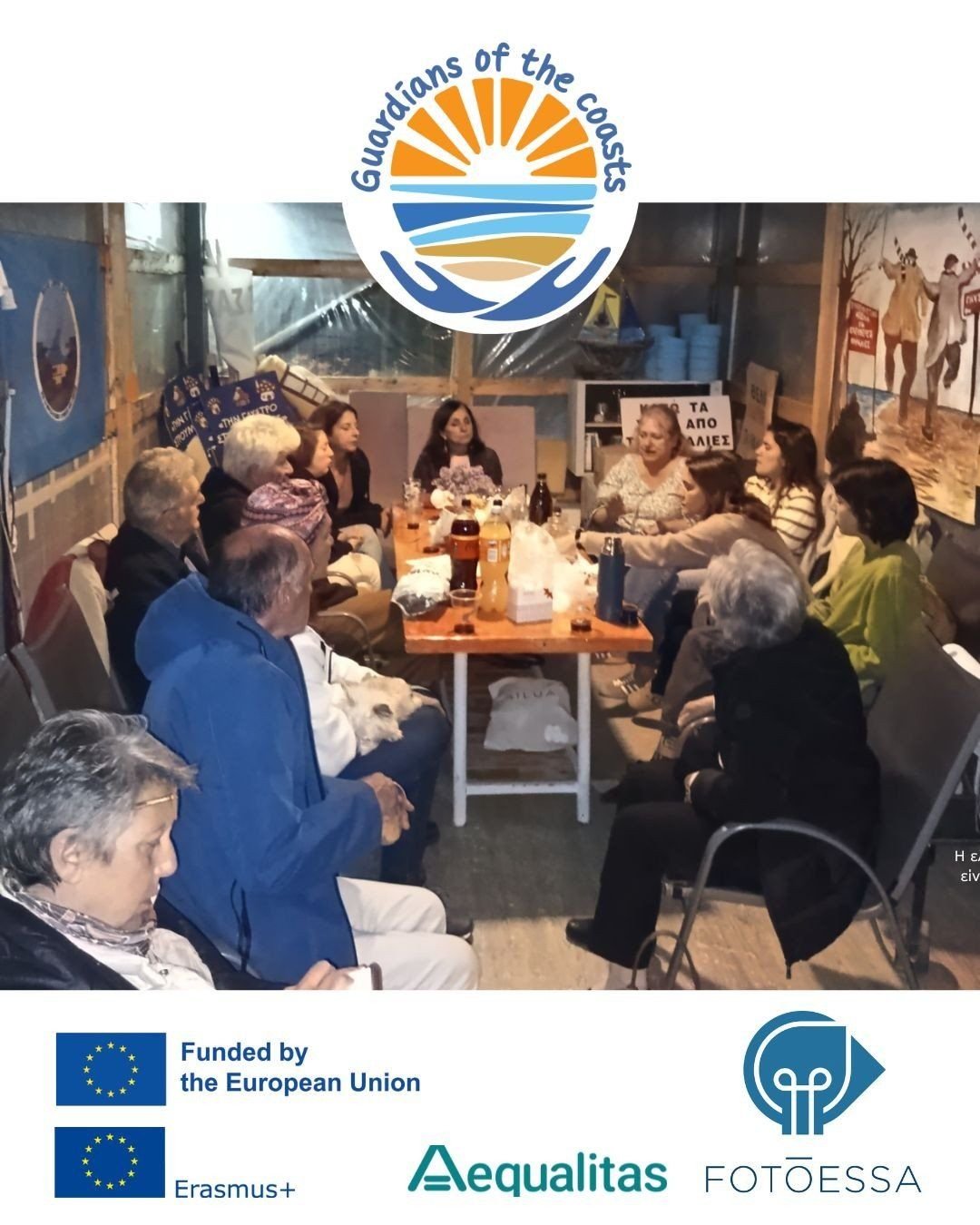
Project partners meet Zacharo Fratzeskou, President of the Cultural Association “Fokaeon Politeia”
What is it that makes us love a place? And how is the desire to protect it born?
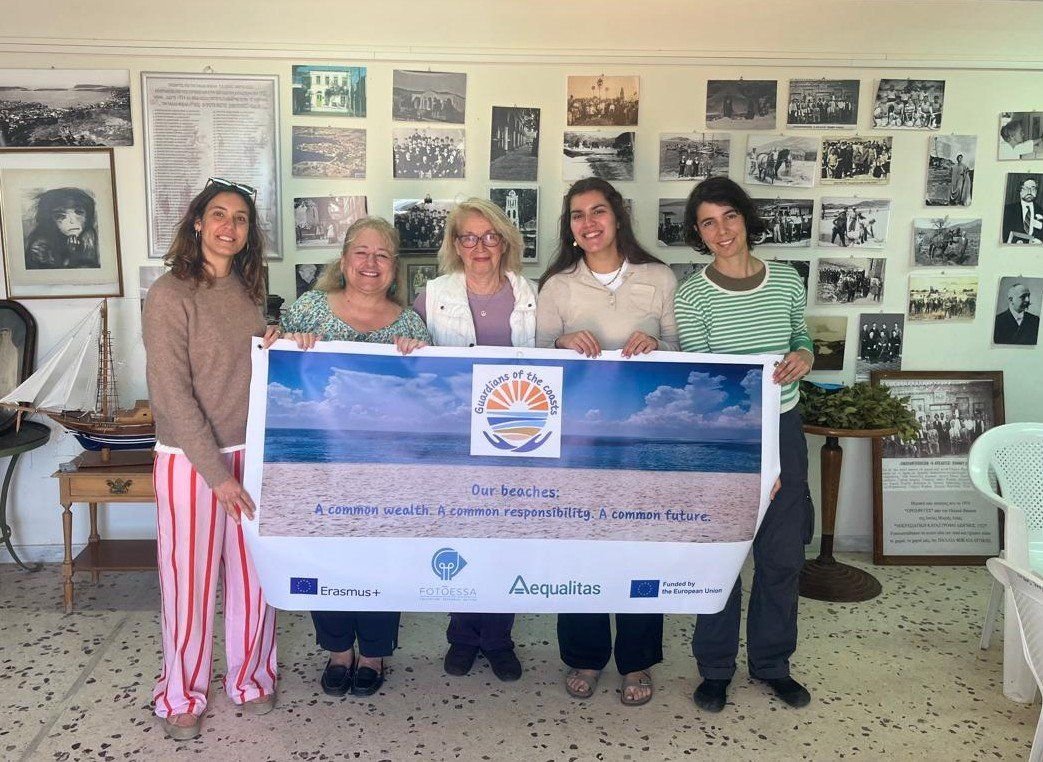
This question was at the heart of the meeting organised by Fotoessa as part of the European Erasmus+ programme “Guardians of the Coasts”, with the participation of the Portuguese partners Rita Sousa from Aequalitas and Rafaela Fortunato and Beatriz Pereira from Impactrip, as well as Zacharo Fratzeskou, President of the Cultural Association “Fokaeon Politeia” and an official supporter of the project.
The discussion was not limited to presenting the rich cultural and historical heritage of the Palaia Fokaia and Anavyssos area. It brought out a deeper dimension of coastal protection: that coasts are not only natural ecosystems but also carriers of historical memory, culture and collective identity.
Through the presentation of the area's history, its significant land and underwater archaeological finds, and the enduring role of the ancient port of Anavyssos in the sea routes of antiquity, the meeting showed how the natural and cultural environment are inseparable parts of the same heritage.
Particular emphasis was placed on the role of education and of informing young people, so that they get to know the history of their place and develop a meaningful relationship with it.
As Ms Fratzeskou put it:
“It is important to know the history of our place. That is how we put down roots, feel proud of where we come from and learn to love it.”
The discussion went one step further, showing that knowing our own history does not lead to isolation but to openness towards others.
As was pointed out, when we truly know and love our own place, we can more easily recognise the value of every other place, understand that people everywhere face similar challenges, and build relationships of mutual respect, cooperation and solidarity.
This approach is directly linked to the principles of intercultural education and active citizenship that run through the Guardians of the Coasts programme. Protecting the coasts is not only about preserving natural heritage but also about bringing to light the stories, people and cultures that have shaped these landscapes over time.
Ms Fratzeskou also presented the activities of the Cultural Association “Fokaeon Politeia” to protect and promote the local cultural heritage, as well as an upcoming event dedicated to the underwater antiquities of the area. The common goal of all these initiatives is to strengthen citizens' knowledge, participation and responsibility towards their shared cultural heritage.
Through meetings like this, the project partners gather experiences and good practices from different sectors of society, which will be used to create the programme's educational Toolkit, highlighting the connection between environmental protection and history, culture and active citizen participation.
The meeting with Zacharo Fratzeskou was a reminder that coasts are not just natural landscapes.
They are places of memory.
Places of encounter.
Places of culture.
And the more we know their history, the more we realise that protecting them is a shared responsibility towards both the past and the generations to come.
Funded by the European Union. Views and opinions expressed are however those of the author(s) only and do not necessarily reflect those of the European Union or the State Scholarships Foundation (IKY). Neither the European Union nor the granting authority can be held responsible for them.